2nd national Conference on Innovations in Indian Science Engineering and Technology

भारतीय विज्ञान, अभियांत्रिकी एवं प्रोधोगिकी में अन्वेषणों पर द्वितीय राष्ट्रीय संगोष्टी

श्रावण कृष्ण पक्ष, प्रविस्टे 2 – 4: विक्रमी सम्वत 2066

Download (PDF, 8.66MB)


CHAIRPERSON, NCISET

Rev. I.P. Aggarwal MERI Group of institutions New Delhi

NATIONAL COORDINATOR, NCISET

Dr. Devendra P. Bhatt Secretariat, NCISET – 2009 Scientist ‘F’ & Head, IPR Management Group National Physical Laboratory “5, Dr. K.S. Krishnan Marg, New Delhi – 110012 and Convener, SSM’D Telefax : 91-11-45608353 (Direct) Mob. — : 09911900671(NCISET), 09911639541 (SSM’D) Fax — : 91-11-45609310 (NPL) E-mail : dpbhatt@nplindia.ernet.in vigyanbharati2 @rediffmail.com Web. : wwwswadeshisciences.org

COMPANY PATRONS

Foundry Chemical Industries P Ltd., Delhi – 110095 Bajaj Electroplaters, Delhi – 110035

Sunbeam Engineering Corporation, Delhi – 110020

SIDDHAST Intellectual Property Innovations (P) Ltd., Delhi – 110092

Prof. Chandra Shakher Dr. K.K. Sharma Dr. D.P. Bhatt President, SSM’D Dr. Dalel Singh Gen. Secretary Vice-Presidents

» Volunteers/Reception counters at the Delhi, Nizamuddin Railway Stations and IGI Airport will be available for information, guidance, free transport facilities, etc.

GBM of the Society will be held at 5 p.m. on July 19, 2009

for which the presence of all the members is highly solicited —

(Agenda will be announced well in advance as per Bye-law).

SPECIAL DATES OF SUBMISSION

Two copies of abstract

in Hindi & English (250 words) Two copies of full papers

(max. 5000 words)

alongwith CD, after the acceptance of abstracts from the organisers Registration and other payments : June15, 2009

May 06, 2009

dune 26, 2009

HIM WAH Golo wea al AHR aT oT |

2 National Conference

nnovations ye ‘Science: Engineering) a Technology

Venue :

MERI College of Engineering & Technology

Manakpuri, New Delhi (India)

Organiser : Science Movement of India, Delhi Jisplay and Demonstrations of Products & technologies : Stall Size of 9 sq. m. is available at the nominal cost of Rs. 6000/- ; Rs. 600/- per sq. m. stall (Rate for the additional space). Different Scientific, Industrial/ Educational institutions and NGO’S are invited to participate with their models. Grassroot Innovators, Artisans, Craftsmen, Farmers will be given special rebate, on request (Organiser : Sri. N.K. Gupta, M : 09818270976, 09968414862)

Registrationfee : Rs. 1000/- (Institutional)

for delegates Rs. 650/- (Individual)

Rs. 1600/- (Group of three)

Rs. 200/- (Accompanying person) Student category Rs. 400/- (*Student/SSM member)

*Post Docs are not included under student category

Life Membership subscription : Rs. 1500/-

of SSM’D (Optional) [Contact : Dr. J.C. Sharma, NPL]

e-mail : jcs28@mail.nplindia.org jugdishchander@yahoo.com

(for new members, registration fee will be waived)

Number of invited discourses (30 minutes each) plus oral (12 minutes each) and poster (space allotted : 1.5m x 1.2 m) presentations are proposed. Registration of the delegates has been planned on first come first served basis. Registration fee includes the provision for the delegate to receive the publication material of the conference, any other complimentary material, 3 days Food, Local transport arrangement, etc. All kinds of payments must be made as DD/Local cheque in favour of Swadeshi Science Movement of India, Delhi.

It is proposed to publish the full papers in the Bharatiya Vaigyanik Evam Audhyogik Anusandhan Patrika. Lively Cultural Evening (s) are also to be scheduled.

Shri Uday Pratap Singh, Hon’ble M.P. (Rajya Sabha) receiving the publication of SSM’D from Prof. K.I. Vasu during the cultural evening of the NCISET – 2006

CHIEF – PATRON

Dr. Murli Manohar Joshi Hon’ble M.P. (Rajya Sabha) & Chairman, Parliamentary Standing Committee on Commerce, GOI

PATRONS

Prof. K.1. Vasu Dr. V.S. Rai Founder National President Director Vijnana Bharati (SSM) ICIUK Bangalore Jabalpur

NATIONAL ADVISORY BOARD

Dr. Vikram Kumar Dr. PS. Goel

Director Secretary

National Physical Laboratory Ministry of Earth Sciences (CSIR), New Delhi GOI

Prof. R.S. Sirohi Dr. S.A. Patil Vice-Chancellor Director

Amity University, Jaipur IARI, Delhi

Prof. V.N. Rajasekharan Pillai Dr. A.R. Upadhya Vice- Chancellor Director

Indira Gandhi National National Aerospace Open University Laboratories (CSIR) New Delhi Bangalore

Prof. S.P. Mehrotra Prof. Prem Vrat Director Vice-Chancellor National Metallurgical UP Technical University

Laboratory (CSIR), Jamshedpur Lucknow

Prof. Ranjit Singh Dr. S.K. Sharma Executive Secretary Advisor, Ayurveda ISTE, New Delhi AYUSH, GOI Prof. K. Bijay Kumar Prof. Raj Senani Chairman Director

CSTT, Delhi, GOI NSIT, Delhi

Dr. S.P.S. Khanuja Dr. Vijay P. Bhatkar Ex-Director, CIMAP (CSIR) & President President, MAPSI, Lucknow Vijnana Bharati

Sri. Roshan Agarwal Prof. V.K. Kapoor Managing Director Director

SIDDHAST Intellectual Property | MERI College of Innovations (P) Ltd. Engineering &

New Delhi Technology, New Delhi

NATIONAL ORGANISING COMMITTEE Prof. Chandra Shakher, Delhi Dr. V. Shanker, Delhi

Sri. S.C. Garg, Delhi Dr. C.S. Nautiyal, Lucknow Dr. H.L. Kushwaha, Jodhpur Prof. L.S. Tanwar, Delhi Sri. R.S. Praveen Raj, Kerala Dr. U.P. Shahi, Meerut

Dr. Asha Gupta, Manipur Dr. Santosh Jain, Haryana Dr. Sanjay Kumar Sharma, U.P Dr. Harish Chander, Delhi Prof. Ramesh Kumar, Bihar Dr. Rakesh Pandit, H.P. Prof. R.C. Gupta, Nagaland Dr. D.P Tripathi, Delhi AIMS

t& To adopt, utilize and integrate Science, Engineering & Technology (SET) as effective instruments for achieving the material welfare of mankind, at the same time, opposing any attempt to the exploitation of masses through SET.

© To adopt and develop Bharatiya languages as media of SET atall levels, especially in taking SET to the masses.

t= To Spread the splendid contributions of ancient Bharatiya civilization, culture, art and SET amongst students / youth for laying the foundations of modern sciences and thus to establish that modern science is not all a western product.

5S To establish the interface between SET and humani: in all facets-physical, mental and spiritual.

t= To organize and conduct meetings, lectures, courses, science research seminars and other activities of interest to the members in their quest for special development and harmony through SET.

s@ To address the artisans, craftsmen, farmers and tribals; promote, preserve & modernize their skills and make them economically strong towards rural development through inputs of modern science & technology integrated with the traditional knowledge who are in fact the true reflection of the spiritual and the material facets of our culture and civilization.

“= To undertake the challenge to connect a vast reservoir of

innovations by the invisible informal sector to the visible established institutions that are exposed to modern

if ‘

WADESHL SCIENCE Movement Or nial sae SCOPE COMPLEX MEW DELH

6.1992

Dr. Murli Manohar Joshi, Hon’ble M.P. (Rajya Sabha) & Chairman, Parliamentary Standing Committee on Commerce presiding the function of the launching of the forum during 1995

science and innovate in a formal way, towards making Bharat innovative and a global leader in sustainable technologies through a major drive of an integrated outreach for R & D – National Innovation System.

t= To disseminate SET to the members and the general public through publications of periodicals, reports, books on SET both ancient and modern, etc.

«= To establish, regulate and maintain supporting centers at regional, district, tehsil, panchayat/city and other appropriate levels and science forums at schools, colleges, universities, polytechnics and similar institutions.

®S SET should not have devil objective. SET shouldn’t strive to commercialization against ethics/morals. SET shouldn’t be above society. SET not contributing towards the welfare of people, should be considered useless.

t= To cooperate, collaborate and coordinate with other societies or bodies pursuing allied aims and objectives.

AREAS TO BE COVERED

Innovative indigenous scientific efforts/Eco-friendly Technology with human face in Physical Sciences, Chemistry, Electrochemistry, Botany, Zoology, Mathematics, Biotechnology, IT, Health care, Water, Agriculture, Geology, Forensic, Environmental, Space & Nuclear Sciences and IPR Leveraging. Ayurvigyan, Yog, Indian system of medicines, Go-vigyan, uses of herbals in modern therapy, Medical Astrology. Innovations in the path of Traditional knowledge and Sustainable

The General Secretary receiving the International felicitation in the Capital in honour of SSM’D from Dr. A.R. Kidwai, His Excellency Hon’ble Governor of Haryana during the 6th World Environment Congress 1997 special focus on rural development through the utilization/management of natural resources vis-a-vis New Economic Environment.

SOME SUCCESS STORIES OF THE SSM’D

t= Bharatiya Vaigyanik Evam Audhyogik Anusandhan Patrika (4 special issues) : Vol. 12 (1), 2004, pp. 1-180; Vol. 12(2), 2004, pp. 181-348; Vol. 15(1), 2007, pp. 1- 108; Vol. 15 (2), 2007; pp. 109-196.

t= National Conference on Innovations in Indian SET – 2006

3“ Akhil Bharatiya Vigyan Sammelan – 2004

i

National Symposium on Ancient SET Interfaced with Modern Knowledge – 2001

tS National Conference on Swadeshi Vigyan – 2000 Swadeshi Vigyan Mela – 2000

R

Vigyan Bharati Pradeepika (Joint Special Issue), Vol. 6(1 & 2), 2000, pp. 1-204.

t= Book on Electroplating and Metal Finishing “Bilingual”, 1997, Shipra Publications, Delhi, pp. 1-309.

PURASKARS

Continuing with our decision taken during 2001, to organize a Public function on this occasion and give away selected awards, Swadeshi Vigyan Puraskars will be bestowed for the fourth time to those Nationalistic persons/institutions from all over India who have contributed significantly in Education, Science, Engineering, Technology and Social service of the nation. Arya Bhatt Puraskars will be given to the selected Science writers/Journalists who have had the

Prof. R.B. Singh, Formerly Director, IARI receiving the Swadeshi Vigyan Puraskar 2006 from Dr. T. Ramasami, Secretary, DST Sel in the capital

distinction of reaching out to the common public throu their scientific approach at the popular level during last 6 years. Innovation comes only when there is competition ; without competition there can’t be innovation. Keeping this in mind, the selection committee will also decide “on the spot” for the Arya Bhatt Samman to be bestowed to those 5 innovators/ tribals/ artisans/ craftsmen who present the best paper/ product presentation in the conference. Biography of the various persons is also invited for this purpose. Director- Generals/Directors/Vice-chancellors/Principals/Managing Directors of different research, educational & industrial organizations and the Parliamentarians can also nominate the persons for the said awards. Decision of the SSM’D will be final in the selection.

SPONSORSHIPS AND PARTICIPATION

~ponsorship fee Rs. 80, 000/- (Min.) (includes free pass for 4 delegates, publication of free Advertisement in the Souvenir/Book or provision of 9 sq. m. space for exhibiting their product (s) and projection of the sponsor’s background through Banner (s) during the Conference)

Lunch/Dinner sponsorship fee : Rs. 50, O00/- (Min.)

(includes free pass for 2 delegates and projection of the sponsor’s background through Banner (s) during the Conference)

Advertisement Tariff for the Bilingual Souvenir, to be released at the time of the Conference :

Back page 4 (Multi colour) : Rs. 20000/-; Inside page 2-front (Multi colour) : Rs. 10000/- ; Inside page 3-back (Multi colour) : Rs. 8000/-; Inside Full page (B & W) : Rs. 6000/- ;

‘ide Half page (B&W) : Rs. 3500/- ; Inside aie page t=e&W) : Rs. 2500/-

Prof. R.S. Nirjar, Vice-Chancellor, Gautam Budh Unieas (Chief Guest) and other dignitaries in the inaugural function of the NCISET – 2006


Press Information Bureau Government of India Ministry of Human Resource Development

Press Information Bureau
Government of India
Ministry of Human Resource Development
31-May-2019 20:50 IST

Dr K. Kasturirangan Committee submits the Draft National Education Policy to the Union HRD Minister

The Committee led by the Chairman Dr. Kasturirangan submitted the Draft National Educational Policy to the Union Human Resource Development Minister, Shri Ramesh Pokhriyal ‘Nishank’ and Minister of State for HRD, Shri Sanjay Shamrao Dhotre in New Delhi today in the presence of Shri R. Subrahmanyam, Secretary Department of Higher Education and Smt. Rina Ray, Secretary Department of School Education & Literacy and other senior officials of the Ministry.


The Government of India had initiated the process of formulating a New Education Policy to meet the changing dynamics of the requirements of the population with regard to quality education, innovation and research, aiming to make India a knowledge superpower by equipping its students with the necessary skills and knowledge and to eliminate the shortage of manpower in science, technology, academics and industry. The extant National Policy on Education, 1986 modified in 1992 required changes to meet the contemporary and futuristic needs of our large youth population.


For this, the MHRD initiated an unprecedented collaborative, multi-stakeholder, multi-pronged, bottom- up people-centric, inclusive, participatory consultation process. The extensive consultations undertaken across multiple levels of online, expert and thematic, and from the grassroots ranging from Village, Block, Urban Local bodies, District, State, Zonal and the National level, provided an opportunity to every citizen to engage in this massive exercise. Several in-person and in-depth deliberations across a wide spectrum of stakeholders were held. Subsequently, a ‘Committee for Evolution of the New Education Policy’ under the Chairmanship of Late Shri T.S.R. Subramanian, Former Cabinet Secretary, was constituted, which submitted its report in May, 2016. Based on this report, the Ministry prepared ‘Some Inputs for the Draft National Education Policy, 2016’.


The Committee had the onerous task of analysing and examining a humungous volume of suggestions, inputs, reports, and outcome documents that preceded its own efforts. The underlying spirit that dictated the Committee’s own course of crafting this significant document was primarily to bring out a vision document which will hold the test of time for at least another 20 years. The Draft National Education Policy, 2019 is built on the foundational pillars of Access, Equity, Quality, Affordability and Accountability. The Committee has proposed to rename MHRD as Ministry of Education (MoE).

In School Education, a major reconfiguration of curricular and pedagogical structure with Early Childhood Care and Education (ECCE) as an integral part of school education is proposed. The Committee also recommends Extension of Right to Education Act 2009 to cover children of ages 3 to 18. A 5+3+3+4 curricular and pedagogical structure based on cognitive and socio-emotional developmental stages of children: Foundational Stage (age 3-8 yrs): 3 years of pre-primary plus Grades 1-2;  Preparatory Stage (8-11 years): Grades 3-5; Middle Stage (11-14 years): Grades 6-8;  and Secondary Stage (14-18 years): Grades 9-12. Schools will be re-organized into school complexes. It also seeks to reduce content load in school education curriculum. There will be no hard separation of learning areas in terms of curricular, co-curricular or extra- curricular areas and all subjects, including arts, music, crafts, sports, yoga, community service, etc. will be curricular.  It promotes active pedagogy that will focus on the development of core capacities: and life skills, including 21st century skills.

The Committee proposes for massive transformation in Teacher Education by shutting down sub-standard teacher education institutions and moving all teacher preparation/education programmes into large multidisciplinary universities/colleges. The 4-year integrated stage-specific B.Ed. programme will eventually be the minimum degree qualification for teachers.

In higher education, a restructuring of higher education institutions with three types of higher education institutions is proposed- Type 1: Focused on world-class research and high quality teaching; Type 2: Focused on high quality teaching across disciplines with significant contribution to research; Type 3: High quality teaching focused on undergraduate education. This will be driven by two Missions -Mission Nalanda & Mission Takshashila. There will be re-structuring of Undergraduate programs (e.g. BSc, BA, BCom, BVoc) of 3 or 4 years duration and having multiple exit and entry options.

A new apex body Rashtriya Shiksha Ayog is proposed to enable a holistic and integrated implementation of all educational initiatives and programmatic interventions, and to coordinate efforts between the Centre and States. The National Research Foundation, an apex body is proposed for creating a strong research culture and building research capacity across higher education.

The four functions of Standard setting, Funding, Accreditation and Regulation to be separated and conducted by independent bodies: National Higher Education Regulatory Authority as the only regulator for all higher education including professional education; Creation of accreditation eco-system led by revamped NAAC; Professional Standard Setting Bodies for each area of professional education and UGC to transform to Higher Education Grants Commission (HEGC). The private and public institutions will be treated on par and education will remain a ‘not for profit’ activity.

Several new policy initiatives for promoting internationalization of higher education, strengthening quality open and distance learning,  technology integration at all levels of education, adult and lifelong learning  and initiatives to enhance participation of under-represented groups, and eliminate gender, social category and regional gaps in education outcomes are recommended. Promotion of Indian and Classical Languages and setting up three new National Institutes for Pali, Persian and Prakrit and an Indian Institute of Translation and Interpretation (IITI) has been recommended. The path breaking reforms recommended will bring about a paradigm shift by equipping our students, teachers and educational institutions with the right competencies and capabilities and also create an enabling and reinvigorated educational eco-system for a vibrant new India.

The draft NEP (Hindi & English) is given at links below::

https://mhrd.gov.in/sites/upload_files/mhrd/files/Draft_NEP_2019_EN.pdf

https://mhrd.gov.in/sites/upload_files/mhrd/files/Draft_NEP_2019_HI.pdf

Draft National Educational Policy of India 2019

The Committee led by the Chairman Dr. Kasturirangan submitted the Draft National Educational Policy to the Union Human Resource Development Minister, Shri Ramesh Pokhriyal ‘Nishank’ and Minister of State for HRD, Shri Sanjay Shamrao Dhotre in New Delhi today in the presence of Shri R. Subrahmanyam, Secretary Department of Higher Education and Smt. Rina Ray, Secretary Department of School Education & Literacy and other senior officials of the Ministry.


The Government of India had initiated the process of formulating a New Education Policy to meet the changing dynamics of the requirements of the population with regard to quality education, innovation and research, aiming to make India a knowledge superpower by equipping its students with the necessary skills and knowledge and to eliminate the shortage of manpower in science, technology, academics and industry. The extant National Policy on Education, 1986 modified in 1992 required changes to meet the contemporary and futuristic needs of our large youth population.


For this, the MHRD initiated an unprecedented collaborative, multi-stakeholder, multi-pronged, bottom- up people-centric, inclusive, participatory consultation process. The extensive consultations undertaken across multiple levels of online, expert and thematic, and from the grassroots ranging from Village, Block, Urban Local bodies, District, State, Zonal and the National level, provided an opportunity to every citizen to engage in this massive exercise. Several in-person and in-depth deliberations across a wide spectrum of stakeholders were held. Subsequently, a ‘Committee for Evolution of the New Education Policy’ under the Chairmanship of Late Shri T.S.R. Subramanian, Former Cabinet Secretary, was constituted, which submitted its report in May, 2016. Based on this report, the Ministry prepared ‘Some Inputs for the Draft National Education Policy, 2016’.


The Committee had the onerous task of analysing and examining a humungous volume of suggestions, inputs, reports, and outcome documents that preceded its own efforts. The underlying spirit that dictated the Committee’s own course of crafting this significant document was primarily to bring out a vision document which will hold the test of time for at least another 20 years. The Draft National Education Policy, 2019 is built on the foundational pillars of Access, Equity, Quality, Affordability and Accountability. The Committee has proposed to rename MHRD as Ministry of Education (MoE).

In School Education, a major reconfiguration of curricular and pedagogical structure with Early Childhood Care and Education (ECCE) as an integral part of school education is proposed. The Committee also recommends Extension of Right to Education Act 2009 to cover children of ages 3 to 18. A 5+3+3+4 curricular and pedagogical structure based on cognitive and socio-emotional developmental stages of children: Foundational Stage (age 3-8 yrs): 3 years of pre-primary plus Grades 1-2;  Preparatory Stage (8-11 years): Grades 3-5; Middle Stage (11-14 years): Grades 6-8;  and Secondary Stage (14-18 years): Grades 9-12. Schools will be re-organized into school complexes. It also seeks to reduce content load in school education curriculum. There will be no hard separation of learning areas in terms of curricular, co-curricular or extra- curricular areas and all subjects, including arts, music, crafts, sports, yoga, community service, etc. will be curricular.  It promotes active pedagogy that will focus on the development of core capacities: and life skills, including 21st century skills.

The Committee proposes for massive transformation in Teacher Education by shutting down sub-standard teacher education institutions and moving all teacher preparation/education programmes into large multidisciplinary universities/colleges. The 4-year integrated stage-specific B.Ed. programme will eventually be the minimum degree qualification for teachers.

In higher education, a restructuring of higher education institutions with three types of higher education institutions is proposed- Type 1: Focused on world-class research and high quality teaching; Type 2: Focused on high quality teaching across disciplines with significant contribution to research; Type 3: High quality teaching focused on undergraduate education. This will be driven by two Missions -Mission Nalanda & Mission Takshashila. There will be re-structuring of Undergraduate programs (e.g. BSc, BA, BCom, BVoc) of 3 or 4 years duration and having multiple exit and entry options.

A new apex body Rashtriya Shiksha Ayog is proposed to enable a holistic and integrated implementation of all educational initiatives and programmatic interventions, and to coordinate efforts between the Centre and States. The National Research Foundation, an apex body is proposed for creating a strong research culture and building research capacity across higher education.

The four functions of Standard setting, Funding, Accreditation and Regulation to be separated and conducted by independent bodies: National Higher Education Regulatory Authority as the only regulator for all higher education including professional education; Creation of accreditation eco-system led by revamped NAAC; Professional Standard Setting Bodies for each area of professional education and UGC to transform to Higher Education Grants Commission (HEGC). The private and public institutions will be treated on par and education will remain a ‘not for profit’ activity.

Several new policy initiatives for promoting internationalization of higher education, strengthening quality open and distance learning,  technology integration at all levels of education, adult and lifelong learning  and initiatives to enhance participation of under-represented groups, and eliminate gender, social category and regional gaps in education outcomes are recommended. Promotion of Indian and Classical Languages and setting up three new National Institutes for Pali, Persian and Prakrit and an Indian Institute of Translation and Interpretation (IITI) has been recommended. The path breaking reforms recommended will bring about a paradigm shift by equipping our students, teachers and educational institutions with the right competencies and capabilities and also create an enabling and reinvigorated educational eco-system for a vibrant new India.

The draft NEP (Hindi & English) is given at links below::

https://mhrd.gov.in/sites/upload_files/mhrd/files/Draft_NEP_2019_EN.pdf

https://mhrd.gov.in/sites/upload_files/mhrd/files/Draft_NEP_2019_HI.pdf

Initiative to crush Indian pharma generic industry #PatINFORMED

@WIPO & @IFPMA launch #PatINFORMED – a new online tool designed to help procurement agencies better understand the global #patent status of #medicines
The Patent Information Initiative for Medicines (Pat-INFORMED) is a resource where patent holders provide information about patents covering approved medicines through a free, open access database.
This database became operational today, along with a platform where procurement agencies can make direct enquiries to companies.
Pat-INFORMED is a partnership between WIPO and the International Federation of Pharmaceutical Manufacturers and Associations, IFPMA, the global trade association representing the research-based pharmaceutical industry. Pat-INFORMED originated in the industry’s efforts to add clarity to patent information about
WIPO is hosting the database and providing the resources to ensure its continued development, while IFPMA is working closely with the 20 leading research-based biopharmaceutical companies that have backed this initiative to help ensure a consistent and coordinated approach.
While information about patent applications and grants reside in the public domain, resources that directly link patents to medicines already on the market are scarce and limited. Tools that directly link granted patents to medicines are only available publicly in certain countries (e.g. the USA’s ‘Orange Book’) or through private third-party databases. Pat-INFORMED aims to help close these gaps and make patent research easier, faster and more accessible to a wider array of health workers.
Important issue which is against generic industry is thay Pat-INFORMED also offers procurement agencies a direct communication channel for follow-on enquiries to participating companies. Each of the participating companies, currently 20, has agreed to engage in discussions with official procurement agencies that are seeking more detailed information about granted patents on specific products.
So far, Pat-INFORMED houses information on over 14,000 individual patents, for 600 patent families and 169 INNs, unique names that are globally recognized and used to identify pharmaceutical substances or active pharmaceutical ingredients within medicines that cover a wide range of conditions.
This initiative is a practical way of reducing the complexity around access to patent information, something health experts have long been calling for. By easing access to patent information for public health authorities, Pat-INFORMED other objective which is against the generic industry is that its main focus is on procurement options available to health agency and government of developing and least deceloping nation which will definetly give negative impact generic contribution to global health.

Trademark Finder Trademark clearance search

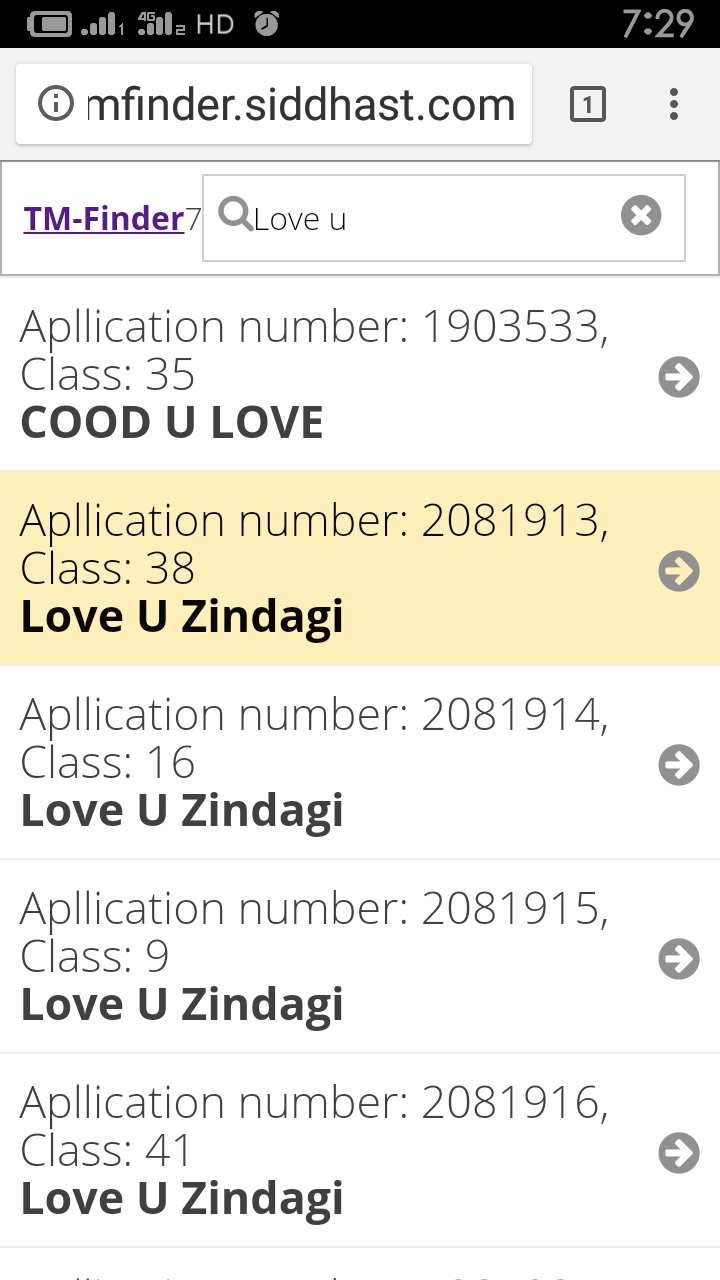
TmFinder helps you to perform your trademark clearance search . Presently Trademark Data of Indian Trademark office has been loaded.

With this tool you can search trademark data both applied and registered without any restrictions of class. Tool is very use full to perform search when you are registering new trademark or applying for new company in Registerar of companies .

The tool is mobile freindly

Http://TmFinder.siddhast.com

Trademark search first screen

http//tmfinder.siddhast.com

बौद्धिक सम्‍पदा अधिकारों को लागू करने पर नई दिल्‍ली में राष्‍ट्रीय कार्यशाला का उद्घाटन

केन्‍द्रीय गृह मंत्री श्री राजनाथ सिंह ने आज यहां बौद्धिक सम्‍पदा अधिकारों को लागू करने के बारे में तीन दिन की कार्यशाला का उद्घाटन वाणिज्‍य और उद्योग मंत्री श्रीमती निर्मला सीतारमण और गृह राज्‍य मंत्री श्री किरेन रिजिजू की गरिमामयी उपस्थिति में किया।

श्री राजनाथ सिंह ने कार्यशाला को सम्‍बोधित करते हुए कहा कि जाली मुद्रा और पायरेसी संबंधी गतिविधियां गंभीर संगठित अपराधों को बढ़ावा देती हैं। ऐसी गतिविधियां जाली मुद्रा का अवैध कारोबार करने वाले अपराधियों और आतंकवादियों द्वारा चलाई जाती हैं। उन्‍होंने कहा कि इसीलिए पुलिस को पुरी जानकारी और प्रशि‍क्षण के साथ लैस रहना चाहिए ताकि बौद्धिक सम्‍पदा अधिकारों के उल्‍लंघनों पर नियंत्रण लग सके।

केन्‍द्रीय गृह मंत्री ने पुलिस प्रशिक्षण संस्‍थानों तथा देशभर की अकादमियों में अपने बलों को बौद्धिक सम्‍पदा अधिकारों के बारे में संवेदी बनाने के लिए बौद्धिक सम्‍पदा अधिकार प्रशिक्षण मौडयूल शुरू करने की घोषणा की।

श्रीमती निर्मला सीतारमण ने कहा कि विश्‍व बौद्धिक सम्‍पदा संगठन (डब्‍ल्‍यूआईपीओ) प्रौद्योगिकी और नवाचार समर्थन के लिए पंजाब और तमिलनाडू में दो प्रौद्योगिकी और नवाचार समर्थन केन्‍द्र (टीआईएससी) की स्‍थापना सीआईपीएएम के सहयोग से कर रहा है। उन्‍होंने कहा कि लोगों को सुरक्षित भविष्‍य के लिए अपने बौद्धिक सम्‍पदा के सृजन और संरक्षण के उपायों के बारे में समझदारी बढ़ाने की आवश्‍यकता है।

गृह राज्‍य मंत्री श्री किरेन रिजिजू ने लोगों से दूसरों की बौद्धि‍क सम्‍पदा का सम्‍मान करने का आगह किया और देश में बौद्धिक सम्‍पदा अधिकार लागू करने के लिए मजबूत व्‍यवस्‍था बनाने की बात कही।

इस कार्यशाला से देश की प्रवर्तन एजेंसियों को बौद्धिक सम्‍पदा अधिकार लागू करने में अपने महत्‍व को समझने में मदद मिलेगी। यह कार्यशाला अधिकारियों को अपने अनुभव साझा करने, श्रेष्‍ठ व्‍यवहारों का आदान-प्रदान करने और बौद्धिक सम्‍पदा अधिकारों को लागू करने के मामले में बेहतर अंतर-एजेंसी समन्‍वय के मंच के रूप में कार्य करेगी। तीन दिन की इस कार्यशाला में प्रवर्तन एजेंसियों के प्रतिनिधियों के अतिरिक्‍त अनेक बौद्धिक सम्‍पदा क्षेत्र के पेशेवर लोगों, वकील, कानून के विद्यार्थी तथा उद्योग संघों के लोग भाग ले रहे हैं।

यह कार्यशाला 22 से 24 अगस्‍त, 2017 तक भारत सरकार के वाणिज्‍य और उद्योग मंत्रालय के औद्योगिक नीति और संवर्धन विभाग के अन्‍तर्गत पेशेवर संस्‍था बौद्धिक सम्‍पदा अधिकार संवर्धन और प्रबन्‍धन (सीआईपीएएम) द्वारा आयोजित की गई है।

Intellectual property right policy india राष्‍ट्रीय बौद्धिक संपदा अधिकार नीति

‘रचनात्‍मक भारत: अभिनव भारत’

केन्‍द्रीय मंत्रिमंडल ने कल राष्‍ट्रीय बौद्धिक संपदा अधिकार नीति को मंजूरी दे दी। इस कदम से भारत में बौद्धिक संपदा के लिए भावी रोडमैप तैयार करने में सहायता होगी। इस नीति से भारत में रचनात्‍मक और अभिनव ऊर्जा के भंडार को प्रोत्‍साहन मिलेगा तथा सबके बेहतर और उज्‍जवल भविष्‍य के लिए इस ऊर्जा का आदर्श इस्‍तेमाल संभव होगा।

राष्‍ट्रीय बौद्धिक संपदा अधिकार नीति एक विजन दस्‍तावेज है, जिससे समस्‍त बौद्धिक संपदाओं के बीच सहयोग संभव बनाया जाएगा। इसके अलावा संबंधित नियम भी तैयार किये जाएंगे। इसके जरिए कार्यान्‍वयन, निगरानी और समीक्षा से संबंधित संस्‍थागत प्रणालियों को लामबंद करने के लिए सहायता होगी। नीति से सरकार, अनुसंधान एवं विकास संगठनों, शिक्षा संस्‍थानों, सूक्ष्‍म, लघु, मध्‍यम उपक्रमों, स्‍टार्ट अप और अन्‍य हितधारकों को शक्ति संपन्‍न किया जाएगा, ताकि वे अभिनव तथा रचनात्‍मक वातावरण का विकास कर सकें।

इस नीति के तहत इस बात पर बल दिया गया है कि भारत बौद्धिक संपदा संबंधी कानूनों को मानता है और बौद्धिक संपदा की सुरक्षा के लिए यहां प्रशासनिक तथा न्‍यायिक ढांचा मौजूद है। इसके तहत दोहा विकास एजेंडा और बौद्धिक संपदा संबंधी समझौते के प्रति भारत की प्रतिबद्धता प्रदर्शित होती है।

बौद्धिक संपदा अधिकारों का महत्‍व पूरे विश्‍व में बढ़ रहा है, इसलिए यह आवश्‍यक है कि भारत में इन अधिकारों के प्रति जागरूकता बढा़ई जाए। बौद्धिक संपदा अधिकारों के साथ वित्‍तीय और आर्थिक पक्ष भी जुड़े हुए हैं। इसके लिए घरेलू स्‍तर पर आईपी फाइलिंग और पेटेंट की वाणिज्यिक स्थिति के बारे में भी जानकारी आवश्‍यक है।

राष्‍ट्रीय बौद्धिक संपदा अधिकार नीति के मुख्‍य बिन्‍दु इस प्रकार हैं –

विजन घोषणा – भारत में सबके लाभ के लिए बौद्धिक संपदा को रचनात्‍मक और अभिनव आधार मिलता है। भारत में बौद्धिक संपदा से विज्ञान, प्रौद्योगिकी, कला, संस्‍कृति, पारम्‍परिक ज्ञान और जैव विविधता संसाधनों को प्रोत्‍साहन मिलता है। भारत में विकास के लिए ज्ञान मुख्‍य कारक है।

मिशन घोषणा – भारत में शक्तिशाली, जीवंत और संतुलित बौद्धिक संपदा अधिकार प्रणाली से रचनात्‍मकता और नवाचार को सहायता मिलती है, उद्यमशीलता को प्रोत्‍साहन मिलता है तथा सामाजितक-आर्थिक एवं सांस्‍कृतिक विकास को बढ़ावा मिलता है। इसके जरिए स्‍वास्‍थ्‍य सुविधा, खाद्य सुरक्षा और पर्यावरण संरक्षा को बढ़ाने में मदद मिलती है। अन्‍य महत्‍वपूर्ण सामाजिक, आर्थिक और तकनीकी महत्‍व भी इससे जुड़े हुए हैं।

लक्ष्‍य – इस नीति के निम्‍नलिखित सात लक्ष्‍य हैं –

1. बौद्धिक संपदा अधिकार जागरूकता : पहुंच और प्रोत्‍साहन – समाज के सभी वर्गो में बौद्धिक संपदा अधिकारों के आर्थिक, सामाजिक और सांस्‍कृतिक लाभों के प्रति जागरूकता पैदा करना।

2. बौद्धिक संपदा अधिकारों का सृजन- बौद्धिक संपदा अधिकारों के सृजन को बढ़ावा।

3. वैधानिक एवं विधायी ढांचा – मजबूत और प्रभावशाली बौद्धिक संपदा अधिकार नियमों को अपनाना, ताकि अधिकृत व्‍यक्तियों तथा बृहद लोकहित के बीच संतुलन कायम हो सके।

4. प्रशासन एवं प्रबंधन – सेवा आधारित बौद्धिक संपदा अधिकार प्रशासन को आधुनिक और मजबूत बनाना।

5. बौद्धिक संपदा अधिकारों का व्‍यवसायीकरण – व्‍यवसायीकरण के जरिए बौद्धिक संपदा अधिकारों का मूल्‍य निर्धारण।

6. प्रवर्तन एवं न्‍यायाधिकरण – बौद्धिक संपदा अ‍धिकारों के उल्‍लंघनों का मुकाबला करने के लिए प्रवर्तन एवं न्‍यायिक प्रणालियों को मजबूत बनाना।

7. मानव संसाधन विकास – मानव संसाधनों, संस्‍थानों की शिक्षण, प्रशिक्षण, अनुसंधान क्षमताओं को मजबूत बनाना तथा बौद्धिक संपदा अधिकारों में कौशल निर्माण करना।

इन लक्ष्‍यों को विस्‍त‍ृत कार्य प्रणाली के जरिए हासिल किया जाएगा। विभिन्‍न मंत्रालयों/विभागों द्वारा की जाने वाली कार्रवाई की निगरानी डीआईपीपी करेगा। डीआईपीपी भारत में बौद्धिक संपदा अधिकारों के भावी विकास, कार्यान्‍वयन, दिशा-निेर्देश और समन्‍वय करने वाला नोडल विभाग होगा।

राष्‍ट्रीय बौद्धिक संपदा अधिकार नीति ‘रचनात्‍मक भारत : अभिनव भारत’ के लिए काम करेगी।

****

बौद्धिक संपदा अधिकार नीति Intellectual Property rights policy India

‘रचनात्‍मक भारत: अभिनव भारत’

केन्‍द्रीय मंत्रिमंडल ने कल राष्‍ट्रीय बौद्धिक संपदा अधिकार नीति को मंजूरी दे दी। इस कदम से भारत में बौद्धिक संपदा के लिए भावी रोडमैप तैयार करने में सहायता होगी। इस नीति से भारत में रचनात्‍मक और अभिनव ऊर्जा के भंडार को प्रोत्‍साहन मिलेगा तथा सबके बेहतर और उज्‍जवल भविष्‍य के लिए इस ऊर्जा का आदर्श इस्‍तेमाल संभव होगा।

राष्‍ट्रीय बौद्धिक संपदा अधिकार नीति एक विजन दस्‍तावेज है, जिससे समस्‍त बौद्धिक संपदाओं के बीच सहयोग संभव बनाया जाएगा। इसके अलावा संबंधित नियम भी तैयार किये जाएंगे। इसके जरिए कार्यान्‍वयन, निगरानी और समीक्षा से संबंधित संस्‍थागत प्रणालियों को लामबंद करने के लिए सहायता होगी। नीति से सरकार, अनुसंधान एवं विकास संगठनों, शिक्षा संस्‍थानों, सूक्ष्‍म, लघु, मध्‍यम उपक्रमों, स्‍टार्ट अप और अन्‍य हितधारकों को शक्ति संपन्‍न किया जाएगा, ताकि वे अभिनव तथा रचनात्‍मक वातावरण का विकास कर सकें।

इस नीति के तहत इस बात पर बल दिया गया है कि भारत बौद्धिक संपदा संबंधी कानूनों को मानता है और बौद्धिक संपदा की सुरक्षा के लिए यहां प्रशासनिक तथा न्‍यायिक ढांचा मौजूद है। इसके तहत दोहा विकास एजेंडा और बौद्धिक संपदा संबंधी समझौते के प्रति भारत की प्रतिबद्धता प्रदर्शित होती है।

बौद्धिक संपदा अधिकारों का महत्‍व पूरे विश्‍व में बढ़ रहा है, इसलिए यह आवश्‍यक है कि भारत में इन अधिकारों के प्रति जागरूकता बढा़ई जाए। बौद्धिक संपदा अधिकारों के साथ वित्‍तीय और आर्थिक पक्ष भी जुड़े हुए हैं। इसके लिए घरेलू स्‍तर पर आईपी फाइलिंग और पेटेंट की वाणिज्यिक स्थिति के बारे में भी जानकारी आवश्‍यक है।

राष्‍ट्रीय बौद्धिक संपदा अधिकार नीति के मुख्‍य बिन्‍दु इस प्रकार हैं –

विजन घोषणा – भारत में सबके लाभ के लिए बौद्धिक संपदा को रचनात्‍मक और अभिनव आधार मिलता है। भारत में बौद्धिक संपदा से विज्ञान, प्रौद्योगिकी, कला, संस्‍कृति, पारम्‍परिक ज्ञान और जैव विविधता संसाधनों को प्रोत्‍साहन मिलता है। भारत में विकास के लिए ज्ञान मुख्‍य कारक है।

मिशन घोषणा – भारत में शक्तिशाली, जीवंत और संतुलित बौद्धिक संपदा अधिकार प्रणाली से रचनात्‍मकता और नवाचार को सहायता मिलती है, उद्यमशीलता को प्रोत्‍साहन मिलता है तथा सामाजितक-आर्थिक एवं सांस्‍कृतिक विकास को बढ़ावा मिलता है। इसके जरिए स्‍वास्‍थ्‍य सुविधा, खाद्य सुरक्षा और पर्यावरण संरक्षा को बढ़ाने में मदद मिलती है। अन्‍य महत्‍वपूर्ण सामाजिक, आर्थिक और तकनीकी महत्‍व भी इससे जुड़े हुए हैं।

लक्ष्‍य – इस नीति के निम्‍नलिखित सात लक्ष्‍य हैं –

1. बौद्धिक संपदा अधिकार जागरूकता : पहुंच और प्रोत्‍साहन – समाज के सभी वर्गो में बौद्धिक संपदा अधिकारों के आर्थिक, सामाजिक और सांस्‍कृतिक लाभों के प्रति जागरूकता पैदा करना।

2. बौद्धिक संपदा अधिकारों का सृजन- बौद्धिक संपदा अधिकारों के सृजन को बढ़ावा।

3. वैधानिक एवं विधायी ढांचा – मजबूत और प्रभावशाली बौद्धिक संपदा अधिकार नियमों को अपनाना, ताकि अधिकृत व्‍यक्तियों तथा बृहद लोकहित के बीच संतुलन कायम हो सके।

4. प्रशासन एवं प्रबंधन – सेवा आधारित बौद्धिक संपदा अधिकार प्रशासन को आधुनिक और मजबूत बनाना।

5. बौद्धिक संपदा अधिकारों का व्‍यवसायीकरण – व्‍यवसायीकरण के जरिए बौद्धिक संपदा अधिकारों का मूल्‍य निर्धारण।

6. प्रवर्तन एवं न्‍यायाधिकरण – बौद्धिक संपदा अ‍धिकारों के उल्‍लंघनों का मुकाबला करने के लिए प्रवर्तन एवं न्‍यायिक प्रणालियों को मजबूत बनाना।

7. मानव संसाधन विकास – मानव संसाधनों, संस्‍थानों की शिक्षण, प्रशिक्षण, अनुसंधान क्षमताओं को मजबूत बनाना तथा बौद्धिक संपदा अधिकारों में कौशल निर्माण करना।

इन लक्ष्‍यों को विस्‍त‍ृत कार्य प्रणाली के जरिए हासिल किया जाएगा। विभिन्‍न मंत्रालयों/विभागों द्वारा की जाने वाली कार्रवाई की निगरानी डीआईपीपी करेगा। डीआईपीपी भारत में बौद्धिक संपदा अधिकारों के भावी विकास, कार्यान्‍वयन, दिशा-निेर्देश और समन्‍वय करने वाला नोडल विभाग होगा।

राष्‍ट्रीय बौद्धिक संपदा अधिकार नीति ‘रचनात्‍मक भारत : अभिनव भारत’ के लिए काम करेगी।

****