Cyber Security

Cybersecurity is the protection of internet-connected systems, including hardware, software and data, from cyberattacks.In a computing context, security comprises cyber security and physical security — both are used by enterprises to protect against unauthorized access to data centers and other computerized systems. Information security, which is designed to maintain the confidentiality, integrity and availability of data, is a subset of cybersecurity.


HAM (Hardware Asset Management)

Hardware Asset Management (HAM)

Hardware Asset Management (HAM) is the management of physical components (desktops, laptops) and computer networks from the procurement stage to the retirement of the asset. HAM needs to be part of organisations overall scope and processes need to be aligned with other IT processes to ensure HAM is a big part of IT.

Just like software, hardware needs to be managed correctly to ensure the organisation is making the most out of the asset. Processes need to be in place to manage the asset from the point of request, to the moment the asset is retired.

Effectively managing hardware assets can also have an impact on the amount of time it takes to fix hardware problems. With the correct HAM processes in place, and a good education and understanding of said processes and hardware asset management in general, end users will see the time it takes to fix, request or procure hardware dramatically reduced. This in turn leaves the ITSM team to concentrate on other areas.

SAM (Software Asset Management)

Software asset management (SAM) is a business practice that involves managing and optimizing the purchase, deployment, maintenance, utilization, and disposal of software applications within an organization. According to the Information Technology Infrastructure Library (ITIL), SAM is defined as “…all of the infrastructure and processes necessary for the effective management, control and protection of the software assets…throughout all stages of their lifecycle.” Fundamentally intended to be part of an organization’s information technology business strategy, the goals of SAM are to reduce information technology (IT) costs and limit business and legal risk related to the ownership and use of software, while maximizing IT responsiveness and end-user productivity.SAM is particularly important for large corporations in regard to redistribution of licenses and managing legal risks associated with software ownership and expiration. SAM technologies track license expiration, thus allowing the company to function ethically and within software compliance regulations. This can be important for both eliminating legal costs associated with license agreement violations and as part of a company’s reputation management strategy. Both are important forms of risk management and are critical for large corporations’ long-term business strategies.

SAM is one facet of a broader business discipline known as IT asset management, which includes overseeing both software and hardware that comprise an organization’s computers and network.

Role within organizations

SAM can serve many different functions within organizations, depending on their software portfolios, IT infrastructures, resource availability, and business goals.

For many organizations, the goal of implementing a SAM program is very tactical in nature, focused specifically on balancing the number of software licenses purchased with the number of actual licenses consumed or used. In addition to balancing the number of licenses purchased with the amount of consumption, an effective SAM program must also ensure that the usage of all installed software is in keeping with the terms and conditions of the specific vendor license agreement. In doing so, organizations can minimize liabilities associated with software piracy in the event of an audit by a software vendor or a third party such as the Business Software Alliance (BSA). SAM, according to this interpretation, involves conducting detailed software inventories on a ongoing basis to determine the exact number of software licenses consumed, comparing this information with the number of licenses purchased, reviewing how the software is being used in respect to the terms and conditions and establishing controls to ensure that proper licensing practices are maintained on an ongoing basis. This can be accomplished through a combination of IT processes, purchasing policies and procedures, and technology solutions such as software inventory tools.

Counting installations is the most common means of measuring license consumption but some software is licensed by number of users, capital, processors or CPU Cores.

More broadly defined, the strategic goals of SAM often include (but are not limited to) the following:

  • Reduce software and support costs by negotiating volume contract agreements and eliminating or reallocating underutilized software licenses
  • Enforce compliance with corporate security policies and desktop/server/mobile standards
  • Improve worker productivity by deploying the right kinds of technology more quickly and reliably
  • Limit overhead associated with managing and supporting software by streamlining and/or automating IT processes (such as inventory tracking, software deployment, issue tracking, and patch management)
  • Establish ongoing policies and procedures surrounding the acquisition, documentation, deployment, usage and retirement of software in an effort to recognize long-term benefits of SAM

SAM Technology
A number of technologies are available to support key SAM processes:

  • Software inventory tools intelligently “discover” software installed across the computer network, and collect software file information such as title, product ID, size, date, path, and version.
  • License manager solutions provide an intelligent repository for license entitlements which can then be reconciled against data provided by Software inventory tools to provide the organization with an ‘Effective License Position’ or view of where the organization is under-licensed (at risk of a compliance audit) or over-licensed (wasting money on unnecessary software purchases).
  • Software metering tools monitor the utilization of software applications across a network. They can also provide real-time enforcement of compliance for applications licensed based on usage.
  • Application control tools restrict what and by whom particular software can be run on a computer as a means of avoiding security and other risks.[6]
  • Software deployment tools automate and regulate the deployment of new software.
  • Patch management tools automate the deployment of software patches to ensure that computers are up-to-date and meet applicable security and efficiency standards.
  • Request management tools allow employees to place requests for software products using a centralized form and process specifically designed to capture and assess specific license requirements as well as to manage and track the procurement and deployment process.
  • Product catalog tools capture product specific information such as name, edition, version and license agreement types as well as other key top level information for products used within the business. This information normalizes product naming conventions with the organization and allows mapping between other technologies tools used in the composite SAM solution.

 

IT Asset Management

IT asset management deals with minimizing costs, mitigating compliance and security risks and optimizing services in a changing industry environment. Knowledge of when and where your IT asset will lead you to knowing what you have and how to control its expenses and utilization.
Furthermore, knowledge is power when negotiating with vendors. Establishing a formal ITAM practice can not only provide you with the information you need for negotiating leverage, but also enable you to ensure ongoing compliance. For example, knowing how many IT assets you have organization-wide and having visibility into all the contracts you have with any given vendor will allow you to have purchasing discussions from a much stronger position.
When it comes to software, having a good understanding of your environment is even more critical. Organizations typically purchase many more licenses than they need as they are not sure of what they need, and err on the conservative side to ensure they are in compliance. Software vendors realize this and have been known to further instill fear, uncertainty and doubt, resulting in increased software license expenses in the absence of hard data about the IT environment.
The effective management, control and protection of software assets is essential for any big organization. This includes those produced by the company and those licensed from 3rd parties to ensure that all software in use within the organization is properly paid for and in compliance with licensing agreements. There is a huge cost involved in acquiring and maintaining of IT assets. Therefore, efficient utilization of these resources is utmost essential.
We provide support and solution for managing the IT asset lifecycle costs that would maximize the business value of technology by uniting the industry leading technologies, and profound specialized skills to empower you to successfully address your business needs. We also provide custom add-ons and tools to fill the gap between business need and available solutions.

[catlist name=”itassetmanagement” child_categories=false excerpt=yes thumbnail=yes posts_morelink=”Know more”]

IT Service Management

You realize that Technology is not an end in itself but just a means of adding value to your customers. Any disruption to the applications and services your customers rely on to do their jobs can bring your business to a crawl.
You need an effective IT Service Management to help you to deliver technology services better, faster, and cheaper. This requires not only a technology solution, but also business processes that align with your organizational objectives.
We work with you to establish and/or refine the appropriate service management processes along with technology solutions to align with them. Whether you’re looking for cloud-based solutions or on-premise applications, we can help. We provide solution that works for you. We can also work with you to determine whether a cloud solution or on-premise application is best for you, and work with you to build a business case for it.
We understand that every customer’s situation is different, with its own unique challenges and constraints, so we work according to your policy to clarify your goals, determine the needs of your business, and identify ways to put different service delivery models into place.
We provide the most innovative ITSM solutions that would amaze your clients, incrementing efficiency by offering technology-enabled process workflow to eliminate manual process, effective problem management and knowledge management to help reduce the recurring issues, automating the report generation process to reduce the reporting cost and reduce downtime with the help of incident, problem, and availability management.
Here are the benefits that would get by our ITSM service:
Reduce IT costs
Improve quality of service
Improve customer satisfaction
Improve governance and reduce risk
Increase competitive advantage
Improve flexibility
Increase agility for new IT services

Domain Name Information

We, at Siddhast, provide search to one of the most comprehensive Domain name who is Database available. Our database comprises records compiled from most of top level domain names and country level domain. Our exhaustive database and the tools have been optimized to suit the specific requirements of our clients. Known to be one of the most powerful domain name search service databases, it has been structured to be industry specific and allows multiple operations to be done simultaneously for the convenience of the clients. A dynamic search process enables our users to efficiently search through the database, without wasting much time on linear searches. Because of these features, we have become one of the most preferred organizations providing effective domain name search service

Information retrieval Software development consulting Services

Siddhast’ in-house software engineering and development team has extremely strong capabilities with a number of open source development technologies, software environments and platforms which are of high quality, extreme scalable, agile and cost effective. Our Information retrieval Software development consulting Services can be leveraged to convert your requirements into a solution

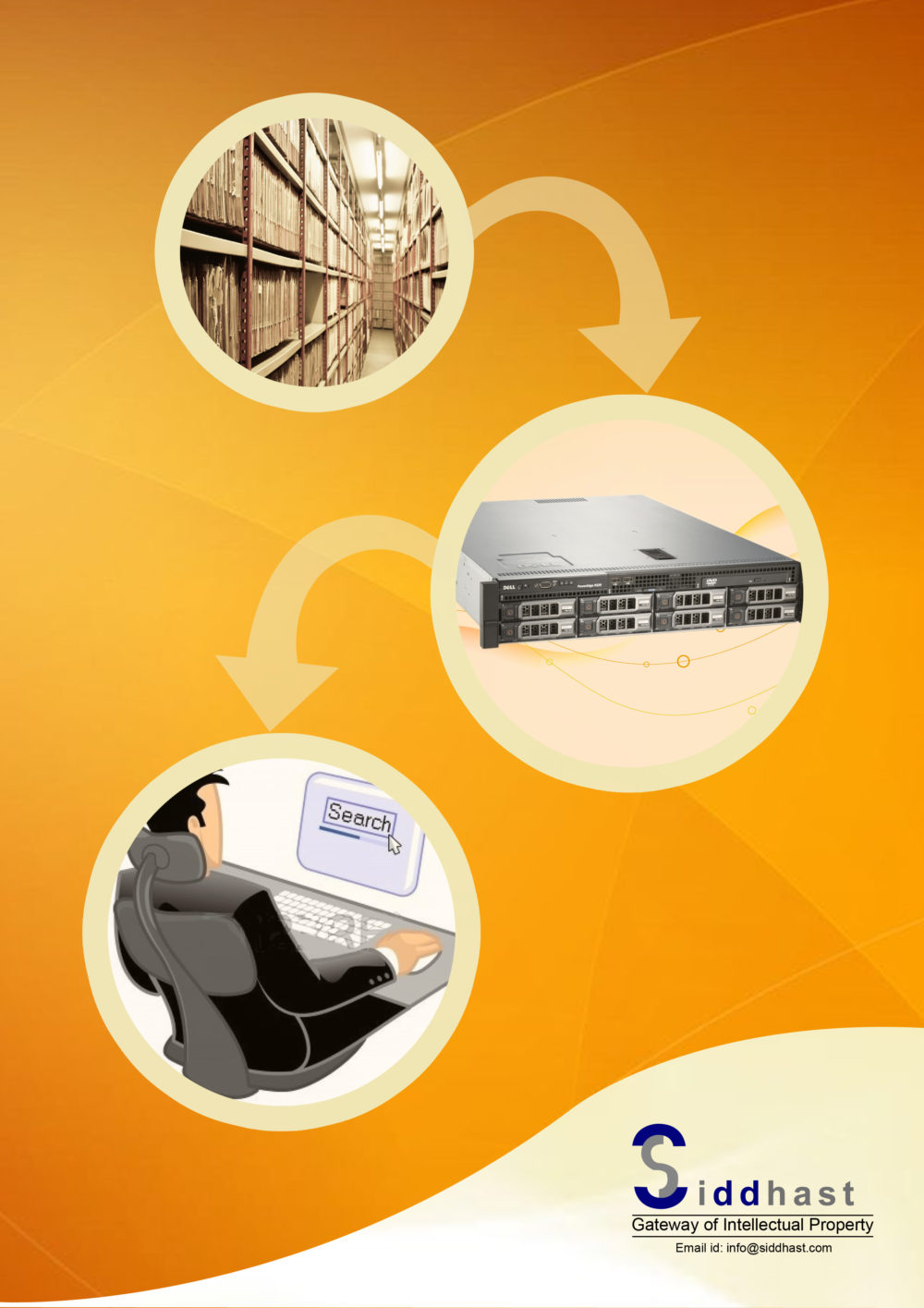
Our Information retrieval software development consulting service covers the entire cycle of enterprise information management – from creation to archival. Our important focus is in retrieval

  • Content Management
  • Records Management
  • Capture
  • Big Data

Discuss your project and get free estimate

Information Technology Consulting

Information Technology is the use of computers and software to manage the information. Computers play the important role in information technology. We can say IT is a technology to maximize the efficiency and production and improves the working efficiency. The world has become a Global HUB due to developments of IT.

[catlist name=”itservices” child_categories=false excerpt=yes thumbnail=yes posts_morelink=”Know more”]

[catlist name=”itsupportservices” child_categories=false excerpt=yes thumbnail=yes posts_morelink=”Know more”]